About TRAASH

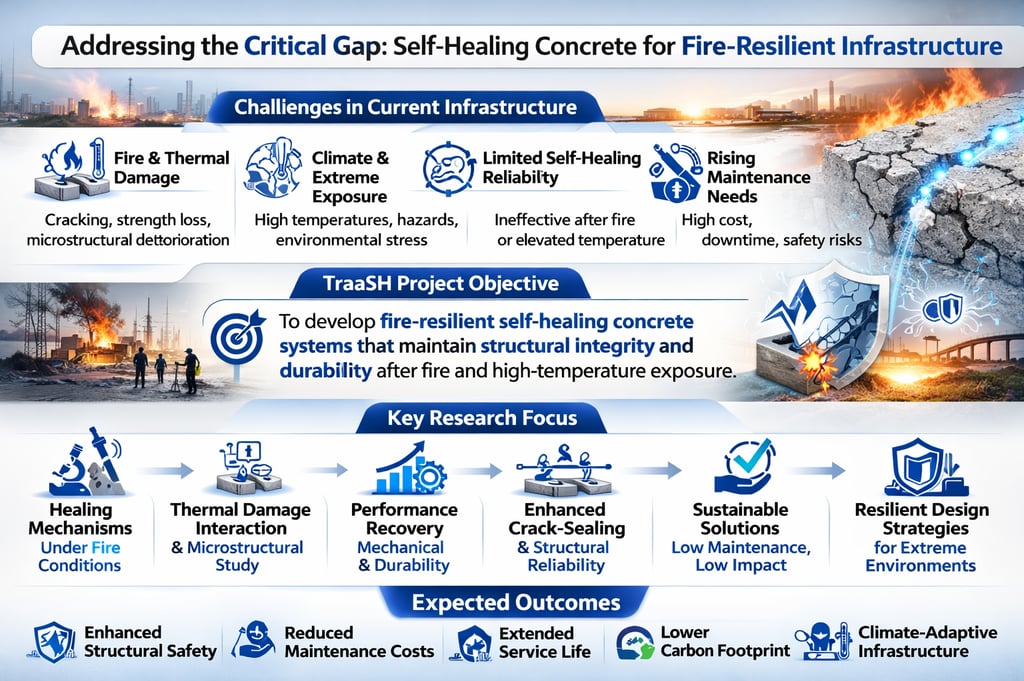
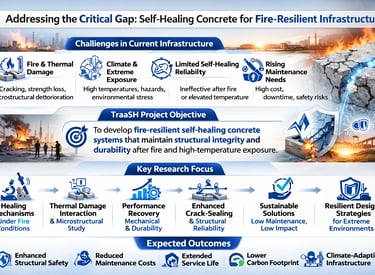
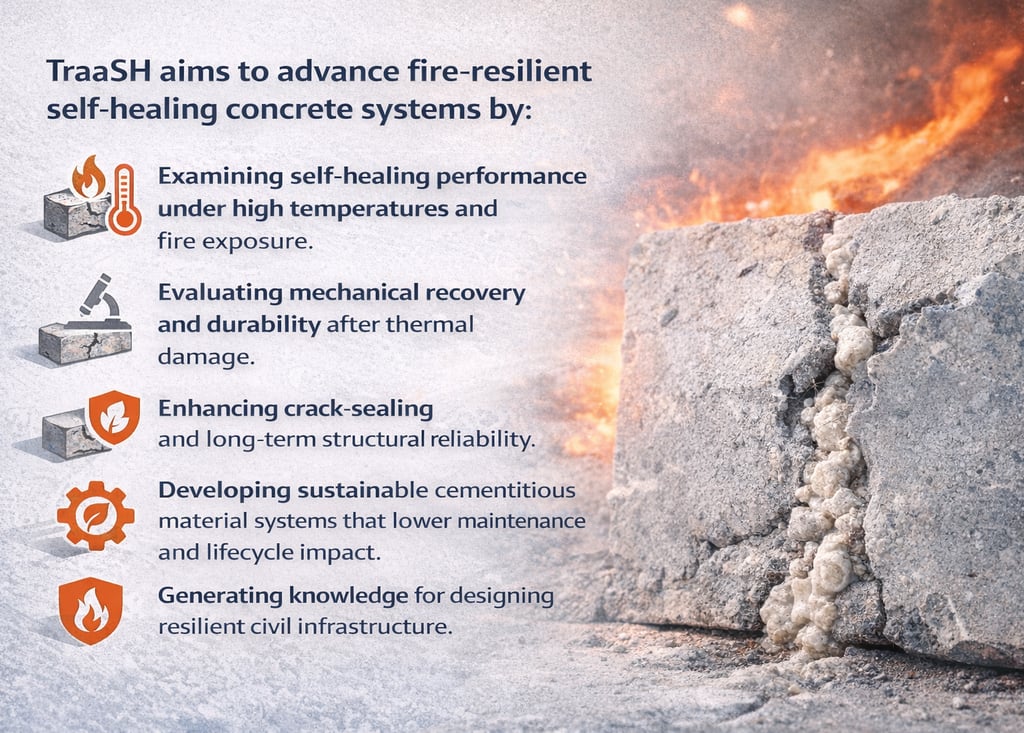
TraaSH is a Marie Skłodowska-Curie Postdoctoral Fellowship project hosted at Ulster University, United Kingdom. The project is dedicated to advancing next-generation cementitious materials that possess autonomous crack-healing capabilities while maintaining performance under elevated temperature and fire exposure conditions.

Despite concrete's widespread use and structural advantages, it remains inherently vulnerable to cracking, durability degradation, and thermal damage. Microcracks not only compromise mechanical integrity but also accelerate deterioration processes such as moisture ingress, chemical attack, and reinforcement corrosion. When subjected to fire or high temperatures, these vulnerabilities intensify, leading to microstructural instability, strength reduction, and long-term serviceability concerns.

While self-healing concrete technologies have demonstrated promising performance under ambient conditions, limited research has explored their effectiveness following thermal exposure. TraaSH addresses this critical knowledge gap by systematically investigating how healing mechanisms interact with thermally induced damage and by advancing the scientific understanding of durability recovery in smart cementitious systems.

Project Background

The Challange

Research Goal

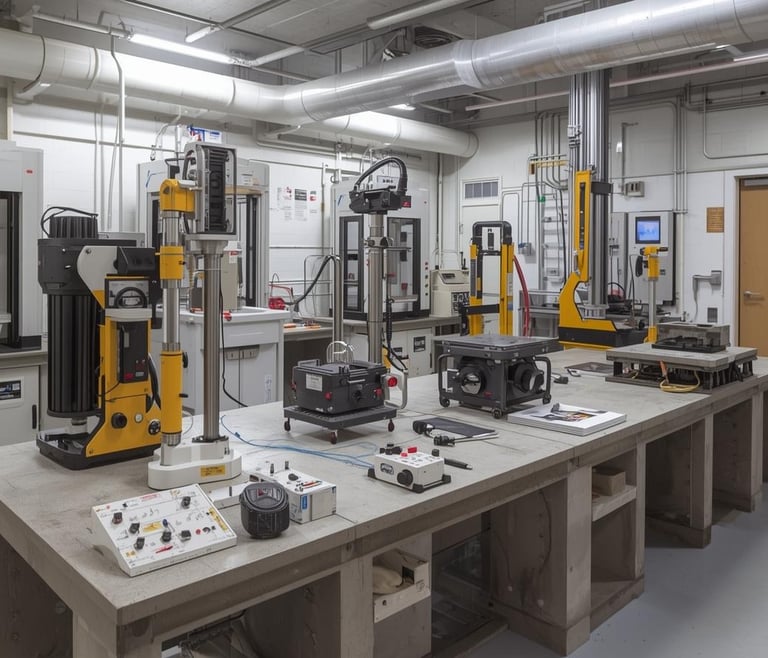
A clean, organized lab space with research equipment.

Scientific Contribution

TraaSH contributes to advancing interdisciplinary research at the intersection of materials science, structural engineering, and fire resilience. By integrating self-healing technologies with high-temperature performance evaluation, the project expands the understanding of how smart cementitious materials respond to thermal stress and structural degradation.

The novelty of the research lies in systematically exploring the durability and structural recovery potential of self-healing systems following fire exposure. This approach moves beyond conventional performance assessment and introduces resilience-oriented material design principles. The knowledge generated will provide new insights into post-fire material behaviour, crack recovery mechanisms, and the long-term viability of autonomous healing technologies in demanding environments.

Through this integrated scientific perspective, TraaSH strengthens the foundation for developing adaptive, high-performance construction materials capable of meeting evolving infrastructure challenges.

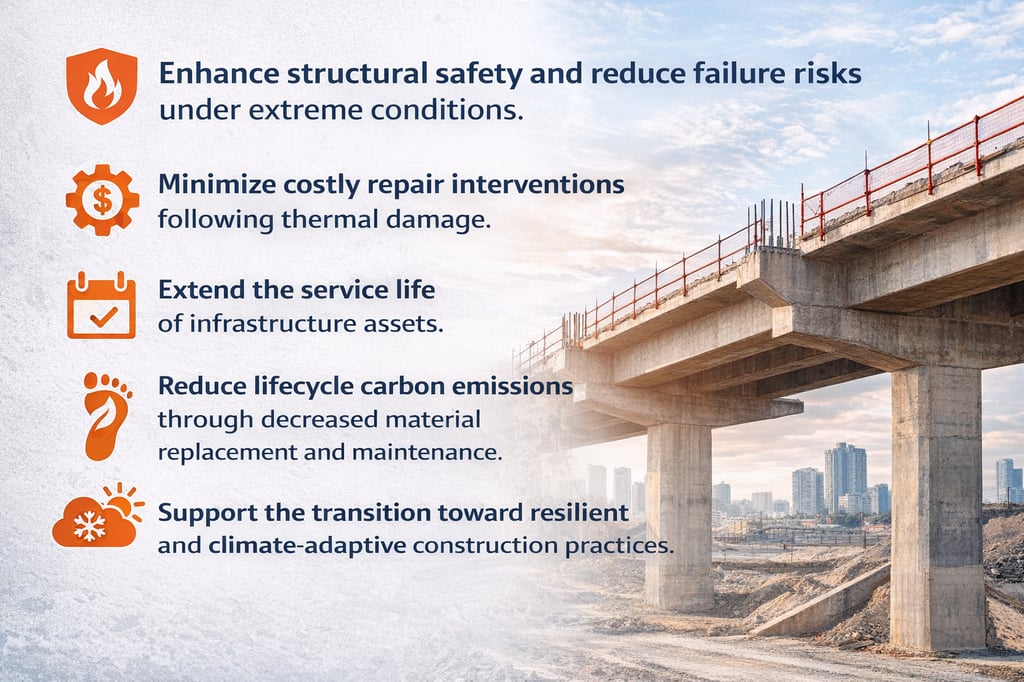
IMPACT & SOCIETAL VALUE